
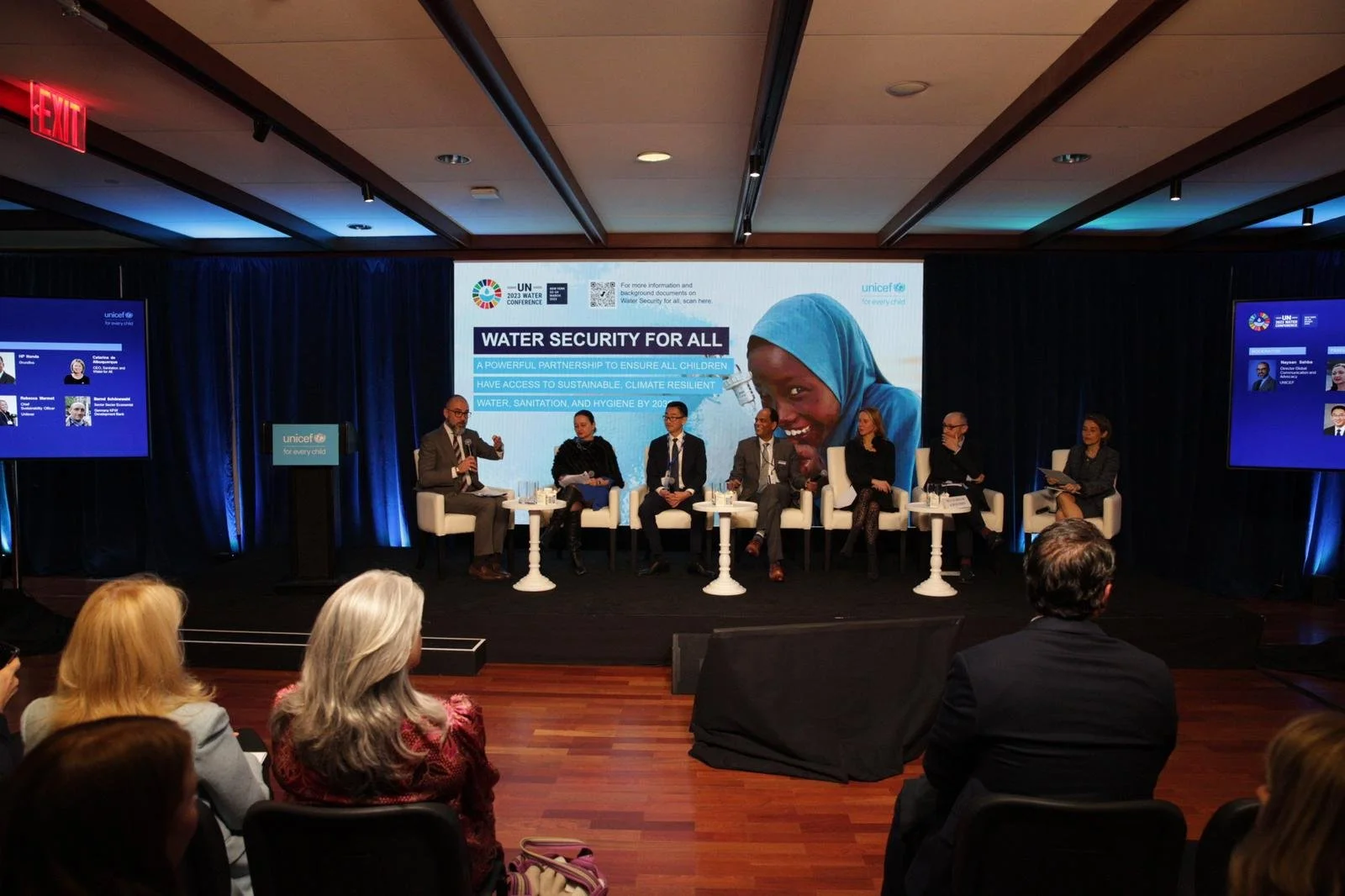
SWA’s role in the UN Water Conference: From 2023 to 2026
In December, the United Arab Emirates and Senegal will co-host the 2026 UN Water Conference in the UAE. The last conference—the first in more than 40 years and co-hosted by the Netherlands and Tajikistan—took place in 2023. It aimed at accelerating global action toward targets of the Sustainable Development Goal (SDG) 6 on water and sanitation ahead of the 2030 deadline. Here’s what the partnership has focused on in the years since.
Water Action Agenda / commitment tracking. SWA's own Water Action Agenda pledge was to keep working on its Mutual Accountability Mechanism (MAM) and open it up to "all sector actors, SWA partner or not," so that Water Action Agenda commitments could be tracked and followed up rather than left as one-off pledges. That commitment came with concrete deliverables: three MAM Global Reports (2024, 2027, 2030), the first of which has already been published. MAM has been recording commitments since December 2018 and has grown from 194 commitments in 2019 to more than 560 today, tracked across governments, civil society, utilities, UN agencies, financing institutions and philanthropic organisations, making it the sector's only accountability process open to every type of actor. Governments remain the largest single source of commitments. Delivery is now showing up in the record too: Nigeria's Clean Nigeria Campaign has declared 135 local government areas open defecation free, Bhutan has achieved nationwide open defecation free status, and Paraguay has restructured its national drinking water and sanitation plan. Verification, financing and subnational reporting are the areas still catching up. The measure of success at Abu Dhabi this December will be the same one MAM already applies: what has happened to commitments already made, not the volume of new ones. Learn more in our recent article for The Water Diplomat.
UN System Strategy / mainstreaming water and sanitation. The UN has its first joint strategy for how its agencies work together on water and sanitation. It runs through five priorities: collective leadership, support to countries, policy coherence, accelerating progress and accountability. SWA contributes to several actions under it.
On accountability, SWA leads the Mutual Accountability Mechanism outright. It's the mechanism the sector uses to track whether commitments are kept.
On policy coherence, SWA launched the High-Level Leaders' Compact on Water Security and Resilience with UNICEF. Ministers from thirty countries endorsed it in Madrid last October. The rollout runs through the Heads of State Initiatives, which SWA coordinates, taking that ministerial endorsement up to Head of State and Government level as national compacts. SWA and UNICEF carry the Compact's follow-up jointly. Success is measured by how far its commitments reach into national strategies and global water and climate processes.
SWA also helps the water sector speak with one voice at the climate COPs, through its engagement with UNFCCC processes and with Water for Climate Pavilion at COPs. It works with UNICEF, WHO and UN-Water on the indicators countries use to measure climate-resilient water and sanitation. It supports the SDG 6 accelerators on finance, data, capacity, innovation and governance, alongside the World Bank, UNEP and OECD.
Water for Cooperation / partnerships. SWA's role runs through individual country compacts. The partnership supported the development of compacts in the Dominican Republic, Democratic Republic of Congo, Ghana, Nigeria, Malawi, Mozambique and South Sudan as well as Nepal's commitment to the Heads of State Initiatives at the 2025 Financing for Development conference in Seville. We are also working alongside emerging initiatives such as Water Forward to strengthen the broader reform pathways toward water security. Learn more about the Heads of State Initiatives and the countries involved.
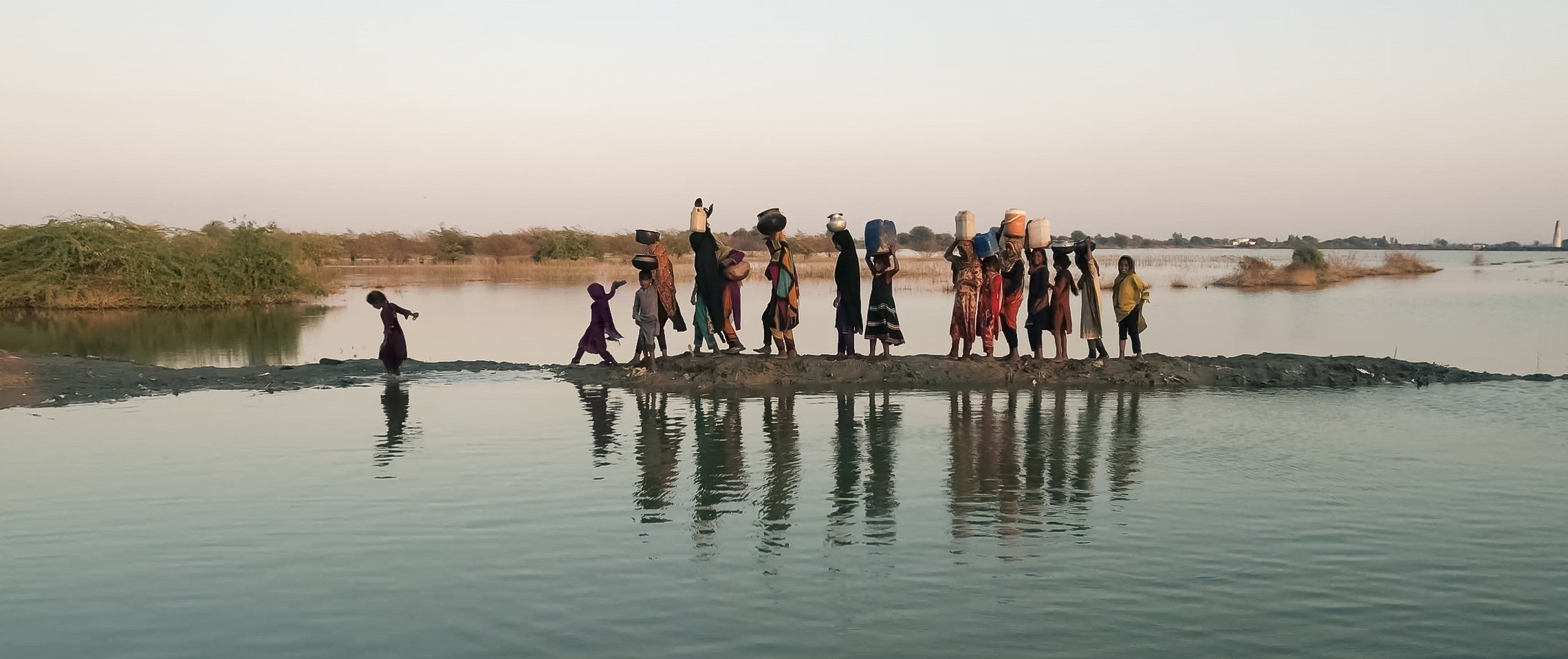
Women and girls traverse a flooded area of Geokaloi village, Sindh province, southern Pakistan, on their way to fetch water. © UNICEF/UNI431676/Sokhin
Water for Sustainable Development / Water Action Decade mid-term review. SWA has positioned continuity and implementation, not new pledge volume, as the real measure of the Decade's mid-term progress. The sector built strong "architecture for making commitments" in 2023 but still has no process for verifying them — and that the test of the 2026 Conference is whether the 2023 commitments were kept, not how many new ones are announced.
Accountability across levels. SWA has also pushed to extend accountability below the national level, citing work for the High-Level Political Forum on subnational actors (provinces, municipalities, utilities) as essential to seeing where commitments are actually delivered or stalled — directly reinforcing the conference's emphasis on strengthened data and monitoring systems.
Where the 2023 conference produced pledges and a UN-wide coordination mandate, SWA has supplied much of the follow-through machinery — HoSI's political mobilization architecture and the MAM's accountability tracking — that keeps those commitments visible and measurable heading into 2026.
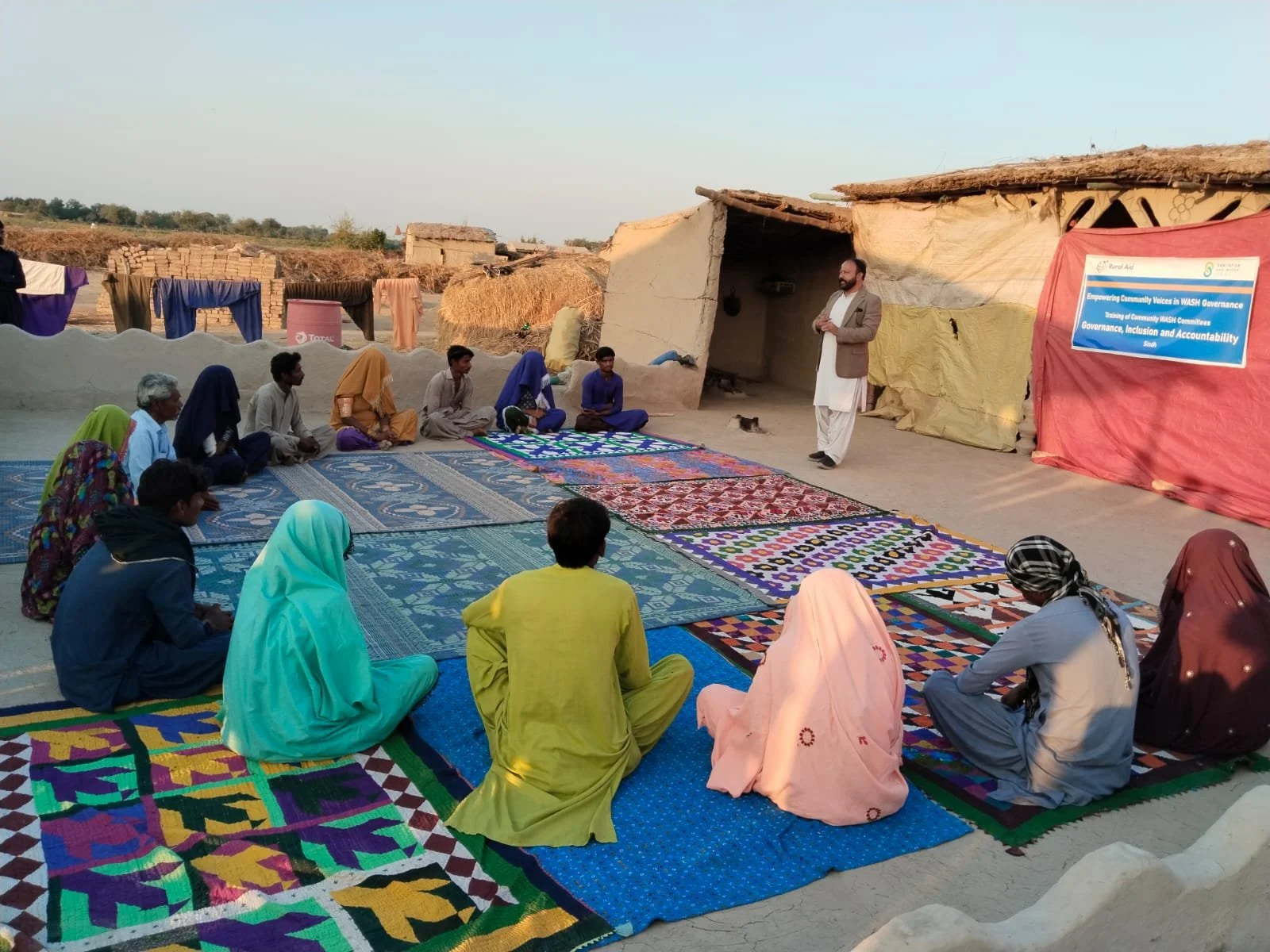
Community WASH Committees Sessions in Sindh, Pakistan, implemented by SWA CSO partner Rural Aid Pakistan.